President – Kusum Knapczyk
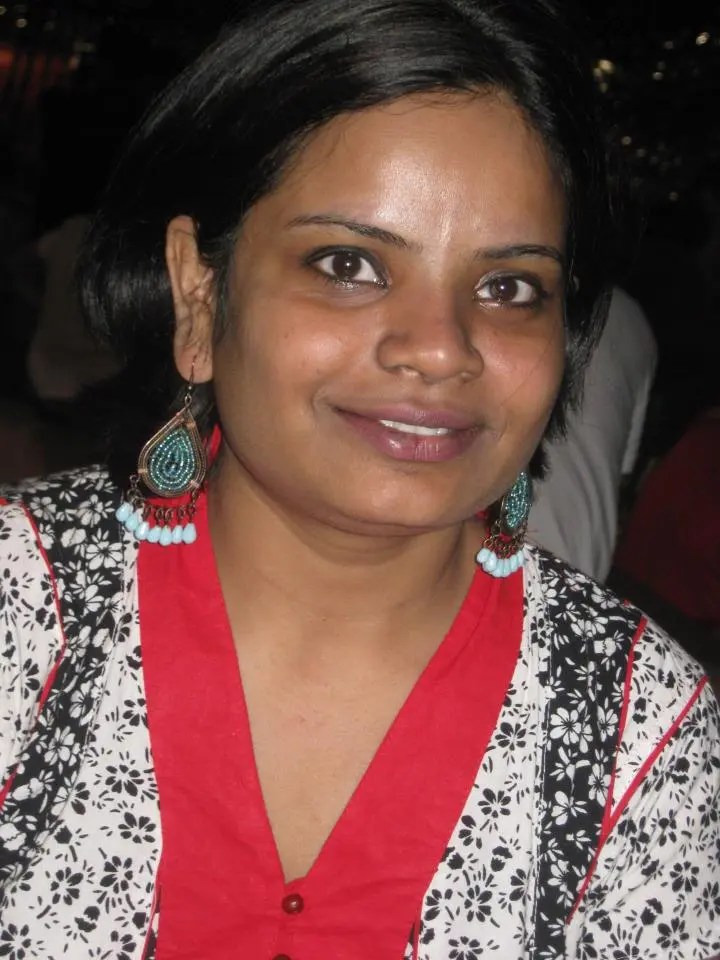
Kusum Knapczyk is a Senior Hindi Lecturer in the Department of Asian and Middle Eastern Studies at Duke University. Kusum received a Ph.D. in Hindi literature from Jawaharlal Nehru University in New Delhi, India. She is the co-author of Reading Hindi: Novice to Intermediate and creator of http://www.hindicentral.com/
Her research interests are the history of Hindi literature and language, Hindi language pedagogy, and Urdu poetry. She has published numerous articles and short stories in Hindi newspapers and magazines. She won first prize for the International Hindi Satire competition in Mauritius conducted by the World Hindi Secretariat. Before joining Duke, Kusum taught Hindi at the University of Colorado Boulder and Indiana University, Bloomington. She has also taught Hindi at summer programs including SASLI, STARTALK, and Yuva Hindi Sansthan at Pennsylvania.
She was awarded the Richard K. Lublin Distinguished Teaching Award from Trinity College and also the Betsy Alden Outstanding Service-Learning Award for her undergraduate teaching.
Kusum is a certified ACTFL OPI and WPT tester for Hindi. She completed the Foreign Language Technology Certificate program from Anderson Language and Technology Center, CU- Boulder. She is a founding member of Acharya Mahavir Prasad Dwivedi Smiti and also serves as evaluator committee in CLS (Critical Language Scholarship) the program, American Councils for International Education.
Vice President – Rajiv Ranjan
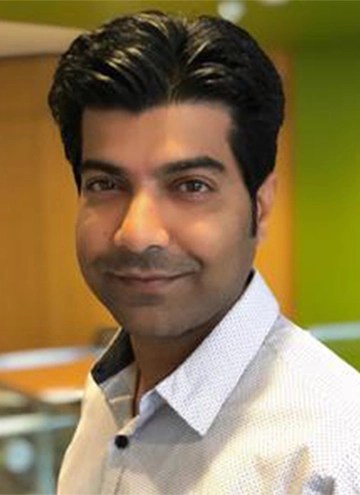
Rajiv Ranjan is an Assistant Professor in the Department of Linguistics, Languages, and Cultures at Michigan State University (MSU). At MSU, Rajiv is associated with the Asian Studies Program and Master of Arts in Foreign Language Teaching (MAFLT) Program. He is also the mentor for the Fulbright Language Teaching Assistants (FLTAs). Before joining MSU, Rajiv Ranjan taught as a graduate teaching assistant at The University of Iowa, Iowa City (2010-2015) where he received his PhD in Second Language Acquisition in 2015.
In addition to his classroom-teaching experience, Rajiv taught the online graduate courses “FLT 860 Foreign/Second Language Acquisition” at MSU, and “Hindi and Urdu Language Structure for Teaching” at Kean University. He taught an immersion program for the South Asia Summer Language Institute (SASLI) during Summer 2016 at University of Wisconsin, Madison and he taught in a study abroad context during the Summers 2015, 2017, and 2018 for the American Institute of Indian Studies (AIIS) in India.
Rajiv’s primary area of research is generative approach to second language acquisition (SLA). His research interests also include socio-cultural approach to SLA, second language writing and speaking, language pedagogy, and morpho-syntax.
Immediate Past President – Elliott McCarter

Elliott McCarter teaches Hindi-Urdu, Sanskrit, and courses on South Asia at Vanderbilt University. His research interests include language curriculum and assessment materials, digital language learning platforms, and program development. Elliott’s other research focuses on Classical South Asia with special focus on the place and placemaking. His forthcoming book is on Kurukshetra, a city in Haryana, India, most famous as the site of the central battle of the Sanskrit epic, Mahabharata. Elliott earned his Ph.D. in South Asian languages and cultures from the University of Texas at Austin. Prior to Vanderbilt, he taught at Emory University. Elliott also serves as a CLS advisor, is a member of the NLSC, and is a member of the 2021-2022 ACTFL LILL cohort.
Treasurer – Vasu Renganathan

Vasu Renganathan has been teaching Tamil language and literature at the University of Pennsylvania since 1996. He earned his masters degree from the University of Washington, Seattle and Ph.D. degree in medieval Tamil language and literature from the University of Pennsylvania. He also had another Ph.D. degree in linguistics from the Annamalai University, India. He began his teaching career in 1989 and previously taught at the University of Michigan, Ann Arbor and the University of Washington, Seattle. In addition to teaching, he has also worked on various curriculum and instructional material development projects. Vasu also served as the Chairman of the International Forum For Informational Technology In Tamil (INFITT). Vasu is also in the International Advisory Board member for the Electronic Journal of Foreign Language Teaching, (e-FLT), Singapore.
Executive Secretary – Peter Knapczyk

Peter Knapczyk is Assistant Professor of Hindi-Urdu at Wake Forest University. He is the co-author of Reading Hindi: Novice to Intermediate (Routledge, 2020). His current book project is a literary and cultural history of marsiyah, a genre of Urdu devotional poetry.
Research Director – Divya Chaudhry

Divya Chaudhry teaches Hindi-Urdu and South Asian culture courses at Vanderbilt University. She earned her Ph.D. in linguistics from University of Florida. Her research interests include second language acquisition, use of conversational analysis to develop interactional and intercultural competencies in speakers of Hindi and Urdu, and language teacher professional development. She, along with her Duke colleague Dr, Kusum Knapczyk, is currently working on creating a digital collection of naturally- occurring Hindi conversations across various personal and institutional contexts. Divya was awarded the American Council for Teaching of Foreign Languages (ACTFL)’s Global Engagement Initiative Award in 2019 for her work in community-engaged language teaching in the United States. Prior to joining Vanderbilt, Divya taught Hindi at Rice University and University of Wisconsin-Madison’s South Asia Summer Language Institute (SASLI).
Communication Director – Mansi Bajaj
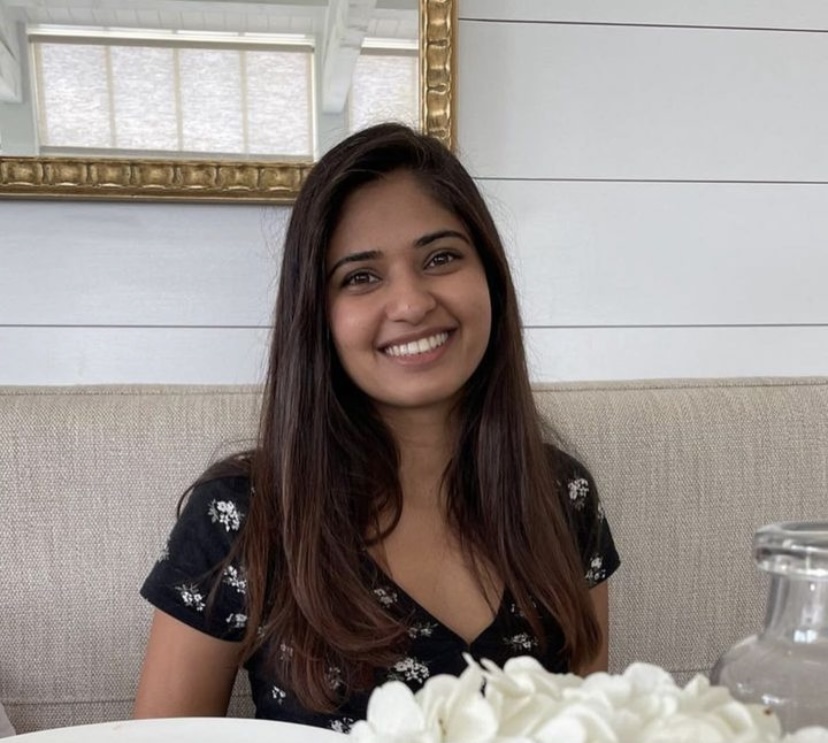
Mansi Bajaj (she/ her) is a Lector of Hindi at Yale. As a language educator, there are three main values that she seeks to exemplify: addressing socio-cultural issues for a broader understanding, utilizing diverse language inputs, and creating an interactive and safe classroom space. Presently, she is working on an Open Educational Resources (OER) project to increase Diversity, Equity, Inclusivity and Belonging (DEIB) in heritage language pedagogy. She is one of the two winners of the 2024 MAFLT LCTL Innovation Award. This award recognizes outstanding, innovative, and transformative uses of technology in the teaching of Less Commonly Taught Languages (LCTLs).
She has previously taught Hindi as an Assistant Professor of Instruction at the University of Texas, Austin (UT). She was on the panel of “Tackling Online Instruction of Less Commonly Taught Languages in a new Academic Year” at the Department of Asian Studies, UT. She is an active participant of workshops on “Diversity and Inclusivity in Language Classrooms”. She received her Ph.D. in Linguistics from the University of Delhi.
In the field of foreign language pedagogy, her research interests are focused on heritage language pedagogy, project-based language learning (PBLL), content-based instruction, genre-based language teaching, and, gender & sexuality, and wellness & mental health in South Asia. In addition, she has enhanced Hindi language instruction at the University of New Haven and K12 programs in Texas by creating Open Educational Resources and Credentialing Exams for Hindi. Her current research projects include developing curriculum and open-educational resources (OER) to suit the needs of heritage learners, using technology innovatively to encourage creative language use, using assessment as a learning tool and literary realism in language class for social sensitization.
https://fas.yale.edu/book/new-instructional-faculty-2022-23/mansi-bajaj
 SALTA
SALTA 