Conference Program
South Asian Language Teachers Association (SALTA)
May 7 (Thursday)
2:00 – 3:00 PM (EST)
SALTA Business Meeting
SALTA members are welcome to attend.
May 8 (Friday)
9:00 – 9:15 AM(EST)
Welcome and Opening Remarks
Kusum Knapczyk, SALTA President, Duke University
Rajiv Ranjan, SALTA Vice President, Michigan State University
Panel 1
Reimagining Pedagogy through Technology, Narrative, and Conversation
Chair: Kusum Knapczyk, Duke University
9:15 – 10:00 AM(EST)
9:15 – 9:30 AM (EST)
From KWL to Conversation: A Student‑Centered Model for Interpersonal Learning in Urdu
Romeena Kureishy, University of Chicago
9:30 – 9:45 AM (EST)
कुली से कुलीन तक: गिरमिटिया भारतीयों के संघर्ष, संस्कृति और स्वाभिमान की गाथा
Deepti Aggarwal, Delhi University
9:45 – 10:00 AM (EST)
Documenting Personal and Social History: From Family Generations to Immigration and Discrimination
Amruta Chandekar, University of Washington, Seattle
10:00 – 10:15 AM (EST)
Tea Break
Panel 2
Student‑Centered Curriculum and Interpersonal Learning
Chair: Meraj Ahmed, University of Minnesota
10:15 – 11:15 AM (EST)
10:30 – 10:45 AM (EST)
Beyond the Textbook: Designing Learner‑Driven Urdu Lessons
Faiza Saleem, University of Wisconsin–Madison
10:45 – 11:00 AM (EST)
Student‑Generated Curriculum in Hindi Classrooms: Real‑Time Personalization
Rachayta Gupta, Zabaan School for Languages
11:00 – 11:15 AM (EST)
Student‑Led OER for Teaching Heritage Language Classes
Rohan Lokanadham and Mansi Bajaj, Yale University
11:15 AM – 12:00 PM
Lunch Break
Keynote Address
12:00 – 1:00 PM (EST)
Introduction
Divya Chaudhry, Vanderbilt University
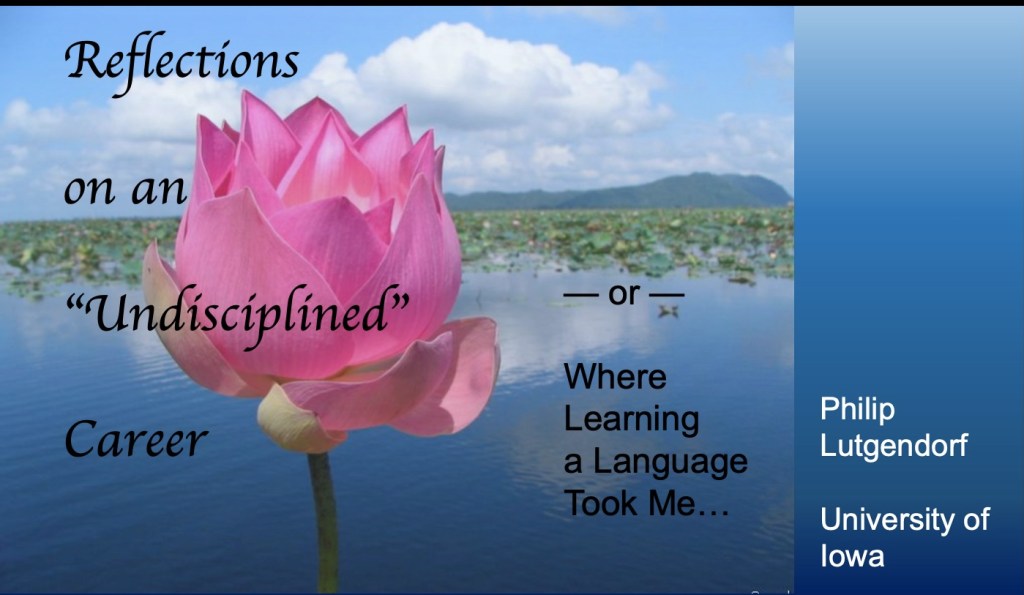
Keynote Speaker
Philip Lutgendorf, Professor Emeritus, University of Iowa
Reflections on an ‘Undisciplined‘ career.
Panel 3
Revisiting Linguistic Foundations: Grammar, Literacy, and Culture
Chair: Rajiv Ranjan, Michigan State University
1:30 – 2:00 PM (EST)
1:30 – 1:45 PM (EST)
Why Grammar Still Matters: Multimodal Teaching and Student Preferences
Sarfaraz A. Farooque, UCLA
1:45 – 2:00 PM (EST)
“You” Isn’t “You”: Teaching Pronoun Pragmatics to Non‑Native Hindi‑Urdu Learners
Meraj Ahmed, University of Minnesota
2:00 – 2:30 PM(EST)
Tea Break
Panel 4
Student‑Centered Cultural Pedagogy in South Asian Language Classrooms
Chair: Gyanam Mahajan, UCLA
2:30 – 3:15 PM(EST)
2:30 – 2:45 PM (EST)
Building a Hindi Language Course in an Emerging LCTL Program
Sheryl Alexander, Fulbright FLTA (Hindi), University of Kansas
2:45 – 3:00 PM (EST)
Student‑Centered Cultural Pedagogy in South Asian Language Classrooms
Muhammad Asif and Aakash Sharma, University of Wisconsin–Madison
3:00 – 3:15 PM (EST)
Tasting the Culture: Food as Pedagogy in South Asian Language Classrooms
Pragya Sengupta, Ohio University
3:15 – 3:30 PM (EST)
Tea Break
Panel 5
Culture as Pedagogy: Identity, Motivation, and Critical Perspectives
Chair: Brajesh Samarth, Emory University
3:30 – 4:30 PM (EST)
3:30 – 3:45 PM (EST)
Interest, Background, and Motivation: Building Blocks for an Effective Lesson
Soma Vyas, Hindi Language Academy, New Jersey
3:45 – 4:00 PM (EST)
Beyond Roots: The Cultural World of South Asian Languages
Akshiti Sharma, University of Michigan, Ann Arbor
4:00 – 4:15 PM (EST)
Critical Language Pedagogy Beyond Superficial Interests and Motivations
Gyanam Mahajan, UCLA
4:15 – 4:30 PM (EST)
Beginner Is Not Basic: Critical Inquiry in the First‑Year Language Classroom
Divya Chaudhry, Vanderbilt University
May 9 (Saturday)
Panel 6
Student-Centered Pedagogy for South Asian LCTLs: Designing OER Textbooks Around Learner Identities and Motivations
Chair: Muhammad Asif, University of Wisconsin–Madison
9:00 – 10:00 AM (EST)
· Sonam Tsering, Basic Tibetan, Columbia University.
· Prasenjit Dey, Basic Bangla, American Institute of Indian Studies.
· Rinku Kathuria, Basic Punjabi, American Institute of Indian Studies.
· Nahid Shiran, Intermediate Persian, Michigan State University.
Panel 7
Future‑Facing Classrooms: Technology, Identity, and Critical Inquiry
Chair: Mansi Bajaj, Yale University
10:00 – 11:00 AM (EST)
10:00 – 10:15 AM (EST)
Student‑Centered and Technology‑Enhanced Pedagogy in South Asian Language Teaching
Shagufta Fatema, University of California, Davis
10:15 – 10:30 AM (EST)
Language, Identity, and Social Awareness: Teaching Hindi through Contemporary Issues
Swapna Sharma, Yale University
10:30 – 10:45 AM (EST)
AI‑Enabled Student‑Centered Pedagogy in South Asian Language Classrooms
Brajesh Samarth, Emory University
10:45 – 11:00 AM (EST)
“मैं कौन हूँ, कौन हूँ मैं? आज अलग कल अलग, इस तरह उस तरह…” Self-expression as the very philosophy of language learning.
Sai Bhatawadekar, University of Hawai’i
11:00 – 11:10 AM (EST)
Tea Break
11:10 AM – 1:00 PM (EST)
Hindi–Urdu Poetry Recitation Competition
Open to university students
Supported by SALTA, Jhilmil‑America, Hindi Se Pyar Hai, and the University of Hawaiʻi
1:00 – 1:30 PM (EST)
Lunch Break
1:30 – 1:45 PM (EST)
Closing Remarks
Divya Chaudhry, SALTA Research Director, Vanderbilt University
Mansi Bajaj, SALTA Communications Director, Yale University
See You Next Year!
SALTA Conference 2026 – Call for Proposals
Theme: Student-centered pedagogy for South Asian Languages: Building lessons upon students’ interests, backgrounds, and motivations
Dates: Friday and Saturday, May 8–9, 2026
Format: Two-day online international conference
This year’s theme, Student-centered pedagogy for South Asian Languages: Building lessons upon students’ interests, backgrounds, and motivations, offers an opportunity to create engaging, culturally responsive, and personalized learning experiences that foster deeper linguistic competence, strengthen learner identity, and sustain motivation in mastering South Asian languages.
Educators use and seek innovative approaches, and the SALTA annual conference provides a platform for the exchange of ideas. We welcome proposals that highlight action research, technology integration, literature-based teaching, games, real materials, and other strategies that support student-centered pedagogy and demonstrate practical outcomes or effective practices. We encourage applications from all South Asian languages that are taught at universities worldwide.
Submission Guidelines:
- Panels: 90 minutes, 3 presenters; include a 100-word panel abstract plus individual paper abstracts (200–300 words each).
- Individual Presentations: 20 minutes; submit a 200–300-word abstract.
Proposals should be in English for the main sessions; additional panels and workshops in South Asian languages may be arranged. Teachers of less-commonly taught South Asian languages are especially encouraged to apply.
Submit your proposal here by April 15, 2026:
Here is the link: Everyone, including those presenting on the panel, needs to fill out this form.
https://docs.google.com/forms/d/1njYbj70XDzUTER-nx9HQPS4nD5OswpaafRoKCB4wd4U/edit
Registration: Free for SALTA members; $35 for professionals; $25 for students.
Join us in sharing ideas that place students at the center and enrich language education around the world.

